

Growth in expedition travel does not look like growth in conventional tourism. It is not measured in passenger volume or new port agreements. It is measured in the quality of access — in how much closer a vessel and its crew can get to the ecosystems, communities, and coastlines that make a route worth sailing. That has been the logic behind every decision Kontiki Expeditions has made as it expanded its small ship expedition offering in Costa Rica and Panama. The routes the operation runs today through the Osa Peninsula, Isla del Caño, and the Gulf of Chiriquí are the result of years of learning what these environments demand and what travelers gain from encountering them properly. That foundation is what life aboard an expedition vessel is built on — and it does not happen quickly.
The expansion into Costa Rica’s Pacific coast marked a turning point. Operating in a new environment meant building relationships from scratch: with local fishing communities along the southern coast, with conservation authorities managing protected marine zones, with naturalist guides whose knowledge of the Osa Peninsula’s wildlife corridors took years to develop. None of that can be replicated by simply adding a new port to an existing itinerary. It required learning the coast the way the coast actually works — through tidal cycles, seasonal wildlife patterns, and the trust of the people who live there year-round. The result is an itinerary that connects travelers to Costa Rica’s Pacific in ways that no land-based or large-vessel operation can replicate, as detailed in the luxury expedition Costa Rica Panama guide.
The move into Panama’s Gulf of Chiriquí followed the same principle. Parque Nacional Coiba — a UNESCO World Heritage Site and one of the largest marine protected areas in the Eastern Pacific — is not a destination you reach by convenience. It requires a vessel small enough to navigate its island channels, a crew trained to operate responsibly inside protected zones, and an itinerary designed around what the park actually protects rather than what is easiest to visit. Kontiki Wayra‘s 16-guest capacity makes all of that possible. The intimacy of the vessel is not a selling point layered on top of the experience — it is the operational condition that makes the experience itself accessible. What that looks like for travelers on a given day is captured in the blog on unforgettable moments on an expedition cruise.
What Expansion Actually Required
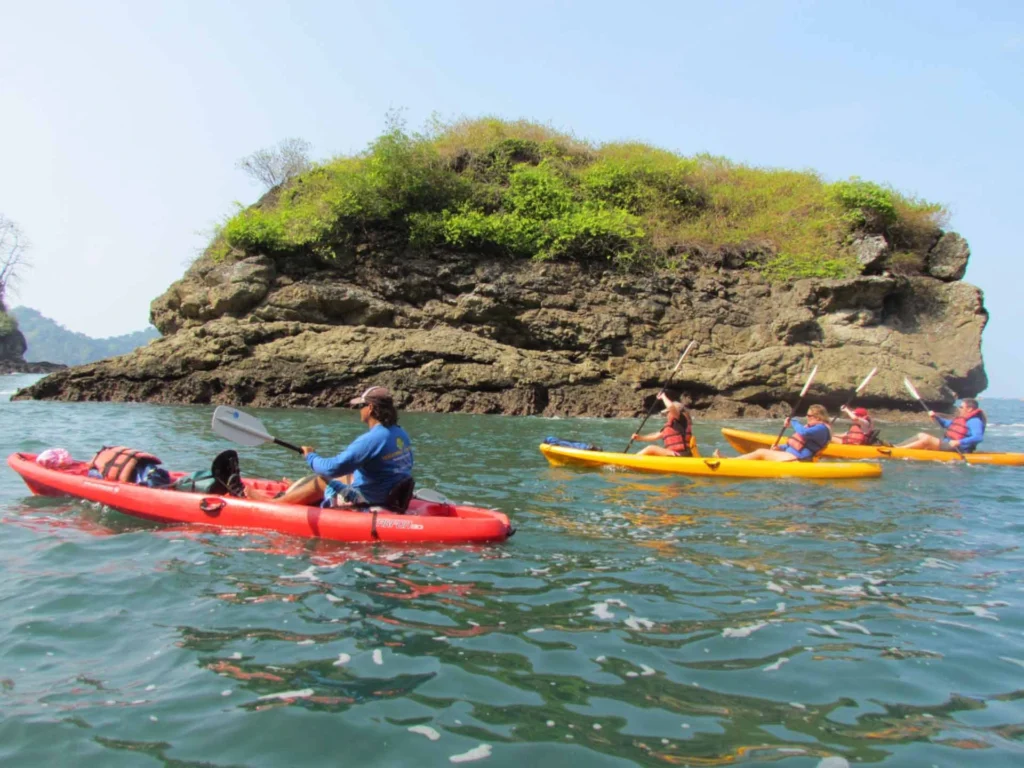
Adding Costa Rica and Panama to the operation meant confronting the limits of what a small ship expedition company can do without compromising the product. The temptation in any growth phase is to scale faster than the infrastructure supports. Kontiki Expeditions moved in the opposite direction — building crew expertise, community relationships, and conservation protocols before formalizing routes, not after.
The naturalist guides aboard Kontiki Wayra are not hired from a general pool of tour guides. They are specialists in the specific ecosystems the vessel navigates: the marine biology of Isla del Caño’s protected reef, the bird species of the Osa Peninsula’s coastal forest, the cultural practices of the indigenous communities along the Burica Peninsula. That specificity is what separates an expedition from a sightseeing tour, and it is what Kontiki Expeditions invested in as it grew.
Sustainability as the Condition for Growth
Every new route Kontiki Expeditions opens creates additional pressure on the ecosystems it enters. That is an unavoidable reality of expedition travel, and it is one the operation addresses through design rather than policy statements. Vessel size caps at 16 guests. Landings in sensitive areas follow protocols aligned with conservation authority guidelines. Community visits are coordinated with the communities themselves, with itineraries adjusted based on their capacity and preferences.
This approach is not generosity — it is the operational logic of a business whose product depends entirely on the health of the environments it visits. A degraded reef at Isla del Caño is not just an ecological loss; it is the elimination of the reason to visit. Sustainable practice and sustainable business are the same thing in this context. The thinking behind the vessel itself reflects that logic, as described in the blog on sustainable yacht design.
Where the Routes Go from Here
The Pacific corridor between Costa Rica and Panama holds more than any single itinerary can cover in one expedition. Humpback whale migration routes that run from July through October. Hammerhead shark aggregation zones in the Gulf of Chiriquí accessible only during specific tidal conditions. Indigenous coastal communities along the Burica Peninsula that have maintained maritime traditions for centuries. The routes Kontiki Wayra currently runs reach some of these. The work ahead is reaching more of them — not by adding guests or vessels, but by deepening the knowledge and relationships that make each encounter genuine.
That is the model Kontiki Expeditions has built and will continue to build on: a small ship expedition operation that grows by getting better at what it does, not by doing more of it faster.
The marine environments at the center of these routes are among the most studied and protected in the Americas. Conservation International documents Costa Rica’s Pacific coastal zone as a global priority for biodiversity — the same ecosystems that Costa Rica’s biodiversity and conservation research has identified as critical for species with no viable habitat elsewhere in the region. The species encountered on Kontiki Wayra expeditions — humpback whales, whale sharks, sea turtles, hammerhead sharks — are tracked under protection frameworks maintained by the IUCN for marine and polar ecosystems, several of which classify these populations and their Pacific habitats as requiring active conservation intervention.
Contact us for more information
