
A logo is rarely just a logo. For most brands it is a design choice — something that looks right, tests well, and moves on to production. For Kontiki Expeditions, it is something else: a direct line to a specific cultural tradition, a family of artisans, and a centuries-old understanding of what it means to navigate the sea with purpose. The Kontiki name itself comes from the Incan deity of navigation — a figure whose story is built around the relationship between human ambition and the ocean’s vastness. That relationship is what life aboard an expedition vessel is designed to recreate, in a different ocean and a different century, but with the same underlying logic: the sea as a place of discovery rather than transit.
The physical logo — the emblem that appears on every piece of Kontiki Expeditions’ identity — was created by the Orrala family, a multi-generational family of artisans whose work in clay and sculpture is rooted in coastal Ecuadorian tradition. The Orrala family’s practice, known as ArteOrrala, represents exactly the kind of cultural continuity that Kontiki Expeditions was built to support. Their techniques have been refined across generations, and the piece they created for Kontiki is not a reproduction of something generic — it is an original work that carries the weight of that lineage. Choosing a handcrafted emblem over a digitally designed logo was a deliberate decision, one that says something specific about how the brand understands the relationship between commerce and culture. It is the same relationship explored in the blog on luxury travel and cultural immersion — where genuine cultural engagement is the product, not the backdrop.
The Incan God Kontiki and the Spirit of Navigation
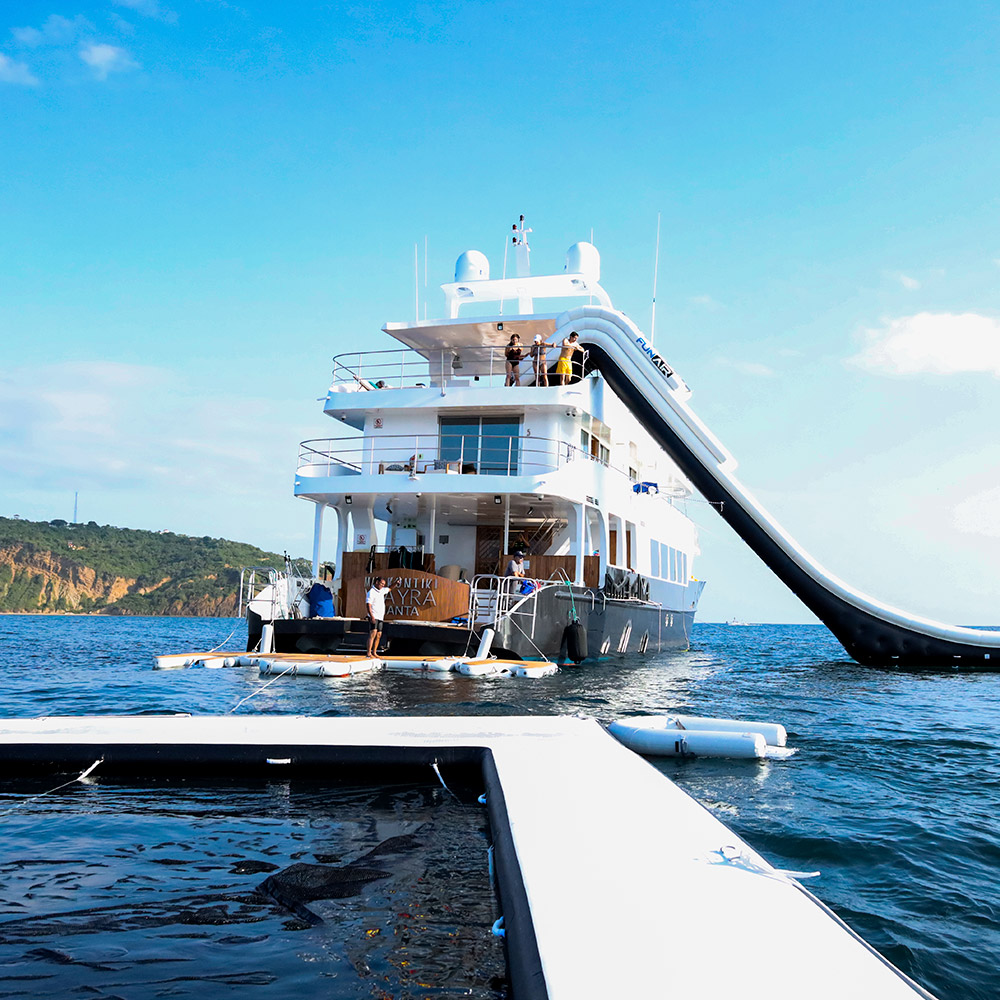
The deity known as Kontiki — also referred to as Viracocha in some Andean traditions — is associated with creation, the sea, and the act of setting out into the unknown. In the Incan cosmological framework, navigation was not simply a practical skill. It was a form of knowledge that connected the human world to something larger. Navigators who understood the Pacific’s currents and star patterns were not technicians — they were interpreters of a living system. That framing resonates directly with what Kontiki Wayra does along the Pacific coasts of Costa Rica and Panama. The vessel’s name carries the same reference: wayra means wind in Quechua, the language of the Inca. A yacht named after wind, carrying the emblem of a deity of navigation, operating in one of the most biologically extraordinary ocean environments on Earth — the name is not incidental.
The Orrala Family and the Craft Behind the Logo
ArteOrrala works in clay and mixed materials, producing sculptures that draw on pre-Columbian iconography and coastal Pacific traditions. The logo piece they created for Kontiki Expeditions references the figure of Kontiki in a form that is both visually distinctive and culturally grounded. It is not a stylized abstraction — it is a crafted object with specific references that the Orrala family understands in depth and that Kontiki Expeditions chose to carry as its public face.
This kind of collaboration — between a brand and a family of artisans with a specific cultural practice — is increasingly rare in the travel industry. It is also the clearest possible expression of what indigenous culture and expedition cruising means in practice: not visiting culture as a tourist attraction, but entering into genuine relationships with the people and practices that make a coastline what it is.
What the Logo Says About the Operation
Brands communicate through their visual identity before they communicate through anything else. A handcrafted emblem created by an artisan family from the Pacific coast of South America, referencing an Incan deity of navigation, used by a boutique expedition cruise company operating in the protected marine zones of Costa Rica and Panama — every element of that chain is consistent. The logo is not decorative. It is descriptive.
For travelers who choose Kontiki Expeditions, understanding the logo is understanding the operation. The vessel is small by design. The itineraries are built around what the ocean actually offers, not what is easiest to sell. The communities encountered along the route are partners in the experience, not scenery. The artisans whose work appears on the company’s identity are part of the same story as the naturalist guides aboard Kontiki Wayra and the conservation protocols that govern how the vessel operates inside protected zones.
The Incan navigation tradition that the Kontiki name references was built on exactly that kind of integrated knowledge — where the sea, the people, the wildlife, and the vessels that moved between them were understood as a single system. That is still the operating principle aboard Kontiki Wayra in the Pacific waters between Costa Rica and Panama.
The cultural traditions that the Kontiki logo references — Andean maritime heritage, Pacific coastal artisanship, pre-Columbian navigation knowledge — are recognized under international frameworks for intangible cultural heritage. The UNESCO Intangible Cultural Heritage program documents exactly these kinds of living practices: craft traditions, navigation knowledge, and community-based cultural expression that exist because families like the Orralas continue to practice and transmit them. The conservation of the marine environments Kontiki Wayra navigates operates under similar principles — protected not because they are frozen in time, but because they are living systems worth sustaining, as recognized by the IUCN for marine and polar ecosystems.
Contact us for more information
